

Does Writing by Hand Improve Memory and Learning?

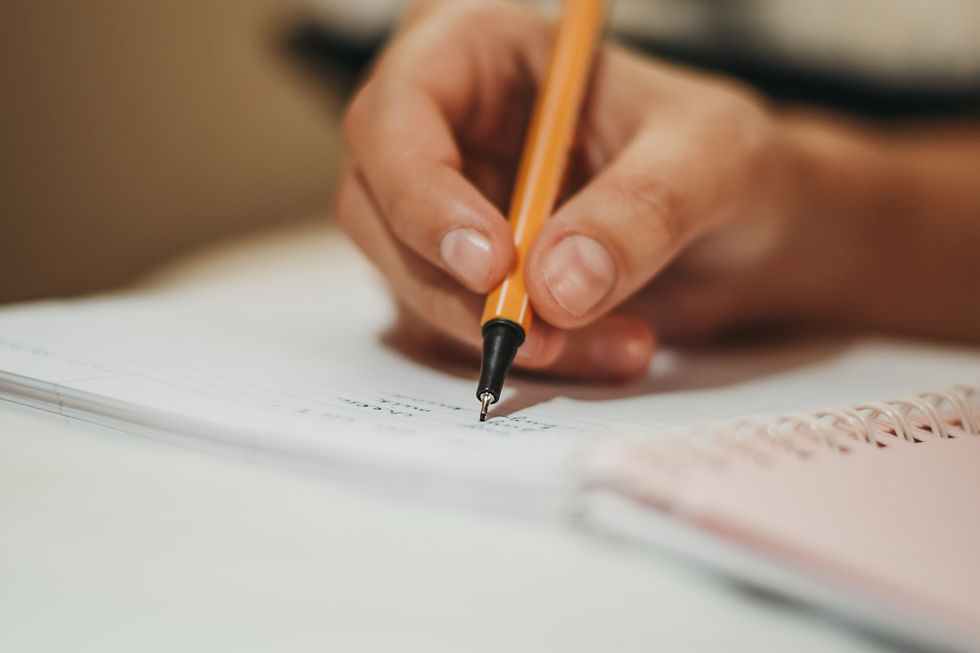
Does Writing by Hand Improve Memory and Learning?
Meta description: Research suggests handwriting engages the brain differently from typing and may support deeper processing, reflection, memory, and learning. Discover when pen and paper may be most helpful.
Typing is fast, convenient, and essential in modern life. But when we want to understand an idea, remember important information, or process an emotion, writing by hand may offer unique benefits.
Recent neuroscience research suggests that handwriting creates patterns of brain connectivity that differ from those produced by typing. The explanation may be simple: handwriting requires the brain and body to work together in a more complex way.
What happens in the brain when we write by hand?
In a 2024 study, Norwegian researchers Audrey van der Meer and F. R. Ruud van der Weel examined the brain activity of university students as they wrote words by hand or typed them on a keyboard.
Participants wore caps containing 256 EEG sensors, allowing the researchers to measure patterns of electrical activity across the brain.
When participants wrote by hand, researchers observed stronger connectivity in brain regions associated with movement, sensory processing, attention, and memory-related functions.
Handwriting requires the brain to coordinate:
Finger and wrist movements
Visual attention
Spatial awareness
Letter formation
Pressure, direction, and timing
Each handwritten letter requires a slightly different movement. Typing, by comparison, uses relatively similar key-pressing motions.
This does not mean the brain becomes inactive while typing. Typing still involves language, attention, planning, and memory. The study does suggest, however, that handwriting may engage certain brain networks more extensively.
Does handwriting improve learning?
Research on note-taking offers another possible benefit.
A well-known study by Pam Mueller and Daniel Oppenheimer found that students who took handwritten notes were more likely to summarize information in their own words. Laptop users tended to record more information but were also more likely to type lectures almost word for word.
Because handwriting is slower, it forces the note-taker to make decisions:
What is most important?
How can I summarize this?
How does this idea connect to what I already know?
How would I explain it in my own words?
That mental selection process may encourage deeper learning.
Later studies have found more mixed results, so handwriting should not be viewed as automatically superior in every situation. The strongest conclusion may be that active processing matters more than simply recording information.
Whether you use a notebook, tablet, or laptop, learning improves when you summarize, organize, question, and reflect rather than passively transcribe.
Handwriting and mental health
Handwriting may also be useful in counseling, journaling, and emotional reflection.
Typing allows thoughts to move quickly. Writing by hand naturally slows the pace. That pause can create space to notice emotions, beliefs, and patterns that might otherwise be overlooked.
Handwritten reflection may help you explore questions such as:
What am I feeling right now?
What am I afraid will happen?
What belief is influencing my reaction?
What do I need?
What matters most to me?
What action would be consistent with my values?
The benefit is not that handwriting is magical. The benefit may come from the focused attention and slower processing that handwriting encourages.
Handwriting exercises for therapy and self-reflection
After a therapy session
Complete these sentences:
The most important thing I realized today was…
The part of me that resisted this realization said…
One step I want to take before my next session is…
When anxiety feels overwhelming
Divide a page into three sections:
What my anxiety predicts
What I actually know
What I can do next
When you feel stuck
Write for five minutes without editing in response to:
What matters to me that I have not been making room for?
When making a difficult decision
For each option, answer:
What would this choice give me?
What might it cost me?
What fear is influencing me?
Which choice best reflects the person I want to become?
When emotions feel unfinished
Write a letter you do not intend to send. Say what you feel, what hurt, what you needed, and what you wish had been different.
The purpose is not to create a perfect message. It is to understand your own experience more clearly.
Is handwriting better than typing?
The best method depends on the person and the task.
Typing may be preferable when you need:
Speed
Accurate documentation
Easy editing
Searchability
Accessibility tools
Collaboration
Handwriting may be helpful when you want to:
Reflect deeply
Summarize information
Reduce distractions
Process emotions
Remember key ideas
Slow down racing thoughts
For people with arthritis, tremors, dysgraphia, fatigue, vision limitations, or neurological injuries, typing or speech-to-text may be more accessible. There is no therapeutic benefit in forcing a method that causes pain or frustration.
The takeaway
Research does not prove that handwriting is always better than typing. It does show that the two activities engage the brain differently.
Typing helps us capture information quickly.
Writing by hand may help us pause, organize, and engage more deliberately with what we are thinking.
The next time you encounter an idea you want to remember—or an emotion you need to understand—consider reaching for a pen and paper.
Sometimes slowing down your hand gives your mind the opportunity to go deeper.


Comments